


The latest complete swimming competition rules for 2024.
Swimming is not just a sport, but an art form combining strength, technique, and endurance. Especially with the continuous development of this sport, understanding the rules and regulations is extremely important for all participants. In 2024, the International Swimming Federation (FINA) updated several points in its swimming competition rules to ensure fairness and safety for athletes. This article will provide a detailed look at the latest 2024 swimming competition rules.
Starting rules in swimming
Starting is an extremely important factor in swimming competitions, playing a decisive role in the final result of each athlete. Below are the basic rules regarding starting that athletes need to be aware of:
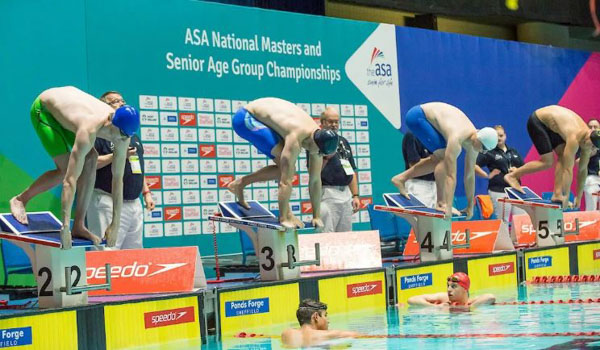
Prepare before departure.
When the referee gives the signal with a long whistle, the athletes must quickly advance to the starting platform, ensuring that both feet are evenly spaced from the edge of the platform. As soon as the starting signal is given, the athlete must quickly bring at least one foot forward to the edge of the platform, ready for the race.
Departure process
Starting is only permitted when a signal is given by the referee. This signal can be given through various means such as gunshots, horn blasts, verbal commands, or whistles, depending on the specific regulations of each competition.
Violation of origin
A false start occurs when an athlete fails to follow the proper preparation procedure or attempts to start before hearing the signal. For a first offense, the referee will give a warning and instruct the athlete to repeat the start. However, a second offense will result in disqualification from the competition.
Rules of competition in freestyle swimming
Freestyle swimming, one of the most popular and prominent swimming styles in water sports competitions, has fundamental rules that every athlete needs to understand to compete effectively. Below is a summary of the main rules related to freestyle swimming:
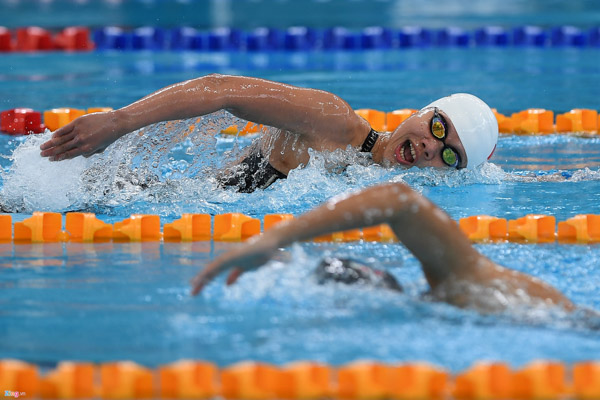
Freedom of swimming style
In freestyle swimming, athletes are completely free to choose any swimming style they feel is most suitable and advantageous for them. This means that in addition to using the standard freestyle stroke, athletes can also combine it with other strokes such as butterfly, backstroke, and breaststroke in the case of medley relay or individual swimming competitions.
Touch the edge of the pool
After each leg of the swim across a certain length of the pool, or upon reaching the finish line, a part of the athlete's body must touch the pool wall. This rule not only ensures fairness in the competition but also creates suspenseful moments for the spectators.
Rise to the surface
Throughout the swimming process, at least part of the athlete's body needs to remain above the water. However, in situations such as turning or at the start, the athlete may be submerged for up to the first 15 meters. After this distance, they need to quickly surface to continue the race.
Rules of competition in breaststroke swimming
Breaststroke is one of the most popular swimming styles and has specific rules to ensure fairness and transparency in competitions. Below are the basic rules of breaststroke swimming competition:
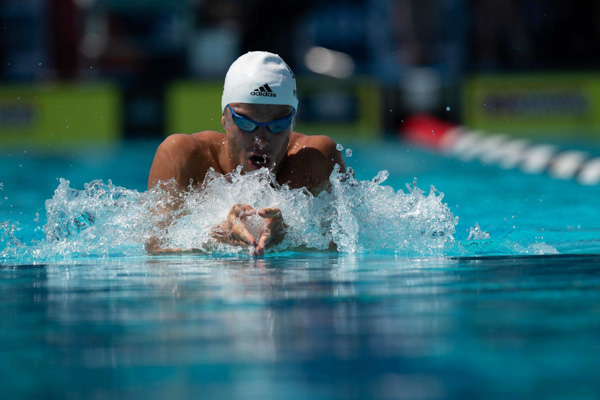
Body posture
When starting the first arm stroke after the start or after each turn, the athlete must keep their body in a prone position and not switch to a supine position. This helps maintain stability during the competition and ensures fair competition.
Hand movements
During the stroke, both arms must move simultaneously from the chest forward on a horizontal plane, either below or above the water surface. Note that the arms should not extend beyond the horizontal axis of the hips, as this reduces efficiency and swimming speed.
Foot movements
Leg movements must be performed simultaneously and on the same horizontal plane. Athletes are not allowed to alternate between the two legs; this helps to increase strength and stability in each stroke.
Touch the edge of the pool
During turns and at the finish line, it is mandatory that both hands touch the edge of the pool simultaneously. This rule not only ensures accuracy in the competition results but also encourages athletes to improve their technique.
Rules of competition in butterfly swimming
Butterfly swimming is a highly artistic swimming style that requires athletes to possess not only strength but also master technique and adhere to strict regulations. Below are the basic rules of competition in butterfly swimming:
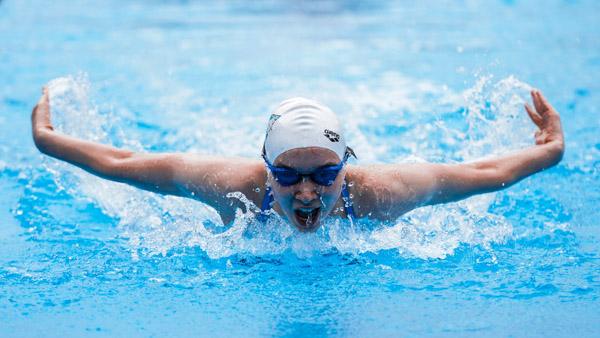
Body posture
Athletes must maintain a prone position on the water's surface, never shifting to a supine position. Both shoulders must be kept parallel to the water's surface; this provides stability to the entire body, thereby optimizing performance during the competition.
Hand movements
Both arms need to perform the sweeping motion simultaneously and in the same horizontal plane. When performing arm movements, both arms must move from front to back, and absolutely must not go beyond the horizontal axis of the hips, to ensure accuracy and efficiency in each stroke.
Foot movements
Leg movements are a crucial element in swimming, requiring perfect synchronization rather than alternating movements. A harmonious combination of movements helps the body maintain balance and flexibility, while also enhancing propulsion efficiency in the water. This not only improves swimming speed but also minimizes energy expenditure, resulting in optimal performance for the swimmer.
Touch the edge of the pool
During the turn or upon reaching the finish line, it is mandatory that both hands touch the pool wall simultaneously. This is a crucial requirement to ensure that the competition results are recorded accurately and fairly.
Rules of swimming competition on the track.
In swimming competitions, adherence to the rules on the course is crucial to ensuring fairness and accuracy for all athletes. Below are the basic rules of swimming competition that all participants need to know:
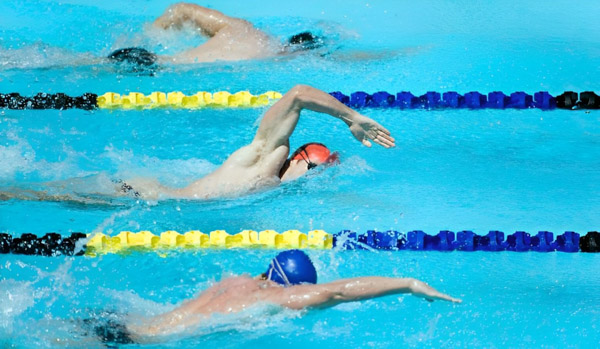
Swimming on the race track
- Athletes must complete the race independently, meaning they must swim the entire length of the course by themselves to be considered to have finished.
- To be eligible, the athlete must finish in the same lane from which they started.
Spin around
- During the turn, the athlete is required to make legitimate contact with the pool wall.
- The turning motion must be performed from the edge of the pool; stepping or kicking from the bottom of the pool is absolutely not permitted.
Clothing and accessories
- Athletes can use protective accessories such as swimming caps, goggles, and earplugs to protect their health and prevent problems associated with prolonged time underwater.
- Competition uniforms are not permitted to feature any advertising for products such as alcohol and tobacco, in order to maintain a healthy and clean competitive environment.
Understanding and adhering to these regulations not only helps athletes showcase their talents but also contributes to building a fair and professional sporting environment.
Swimming rules in timekeeping
Timing in swimming is an essential element, ensuring accuracy and fairness in all competitions. Below are the basic rules regarding timing according to swimming regulations:
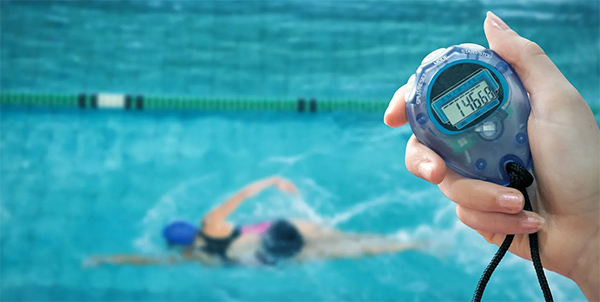
Stopwatch
Timekeeping devices: In swimming, recording competition times is done using modern electronic devices to ensure absolute accuracy. Time is counted from the moment the athlete starts until they finish the race by touching the pool wall at the finish line. These advanced technologies not only improve accuracy but also provide an exciting experience for both athletes and spectators.
In case of equipment malfunction
In case of equipment malfunction: If the pool is not equipped with an automatic timing system or if this system malfunctions, a dedicated team of referees will be assigned to perform manual timing. Each lane will have three main timekeepers and two reserve timekeepers, ensuring sufficient personnel are always available to accurately and promptly record competition times, thus maintaining fairness and transparency in the competitions.
The timekeepers will start their clocks upon receiving the starting signal from the head referee and will stop immediately when the swimmer completes their distance. This process not only helps keep the competition running smoothly but also enhances transparency and fairness in the final results.
Conclude
Swimming rules are designed to ensure fairness, accuracy, and safety for athletes. These rules not only aim to provide athletes with opportunities to showcase their abilities but also contribute to building a professional and civilized competitive environment.
Understanding the rules and regulations is crucial for all athletes and competition organizers. Hopefully, this article will provide you with useful knowledge and information about the latest swimming competition rules for 2024.